Form Study: Daucus
Daucus Carota Dara is a staple of my work for a variety of reasons. As a fresh stem, this impactful umbellifer ranges from dark burgundy – rich and elegant, to a creamy white, with all the nuances in between. Sturdy stalks hold the featherlight florals tall and proud. Solo stems cast shadows with their strong silhouette. Clustered together, Daucus creates undulating mounds of soft inviting textures, which appear to ebb and flow.
This is my fourth year raising Daucus from seed. Planted in the greenhouse in autumn, I’ve found it reliable to germinate and easy to nurture into adulthood. In fact, it does not need much nurturing at all - reassuringly thriving on neglect. Happy under glass and then happy in the ground. Once blooming, I cut a reserved amount. A delicate balance between what is enjoyed indoors, and what remains to be enjoyed outside.
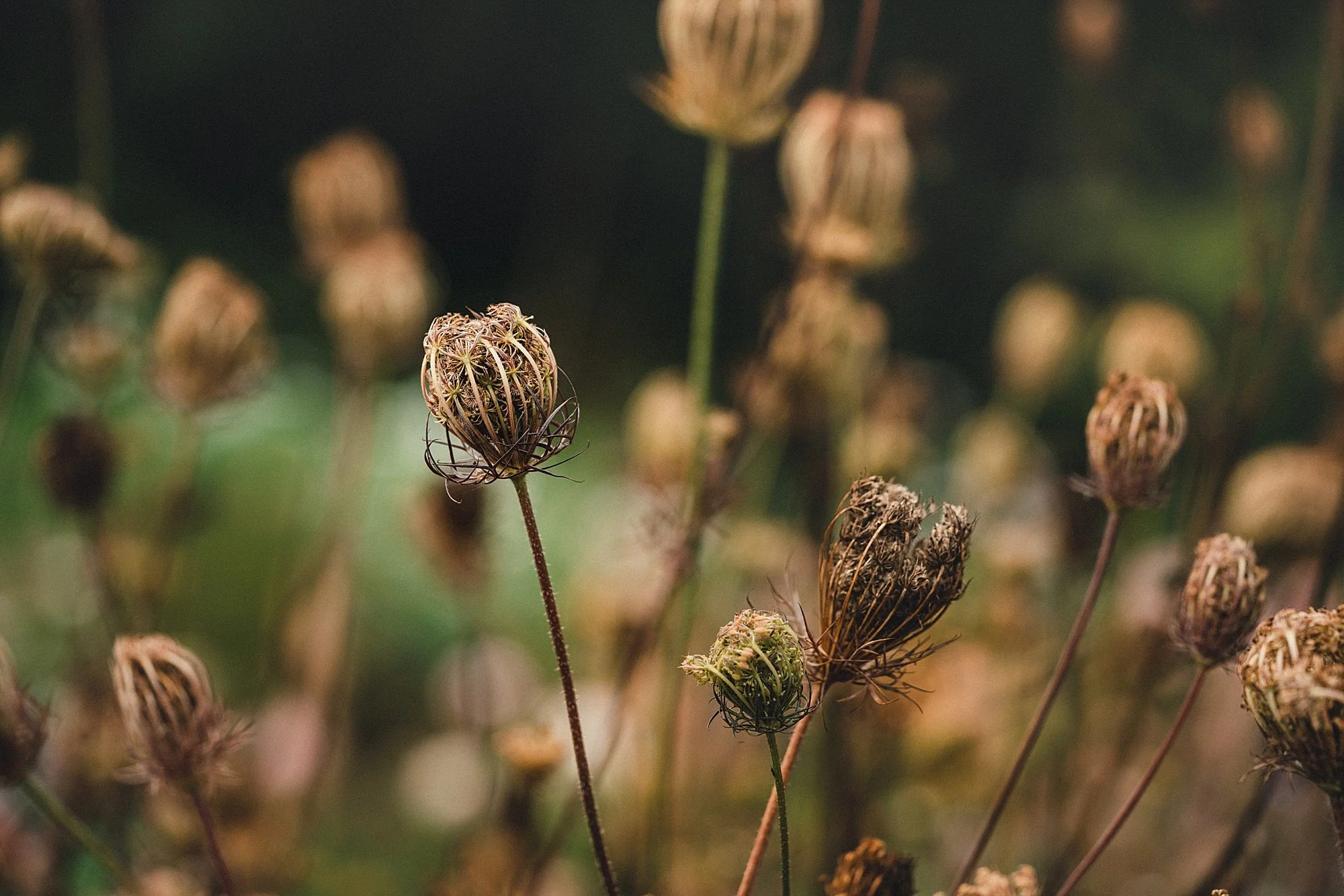
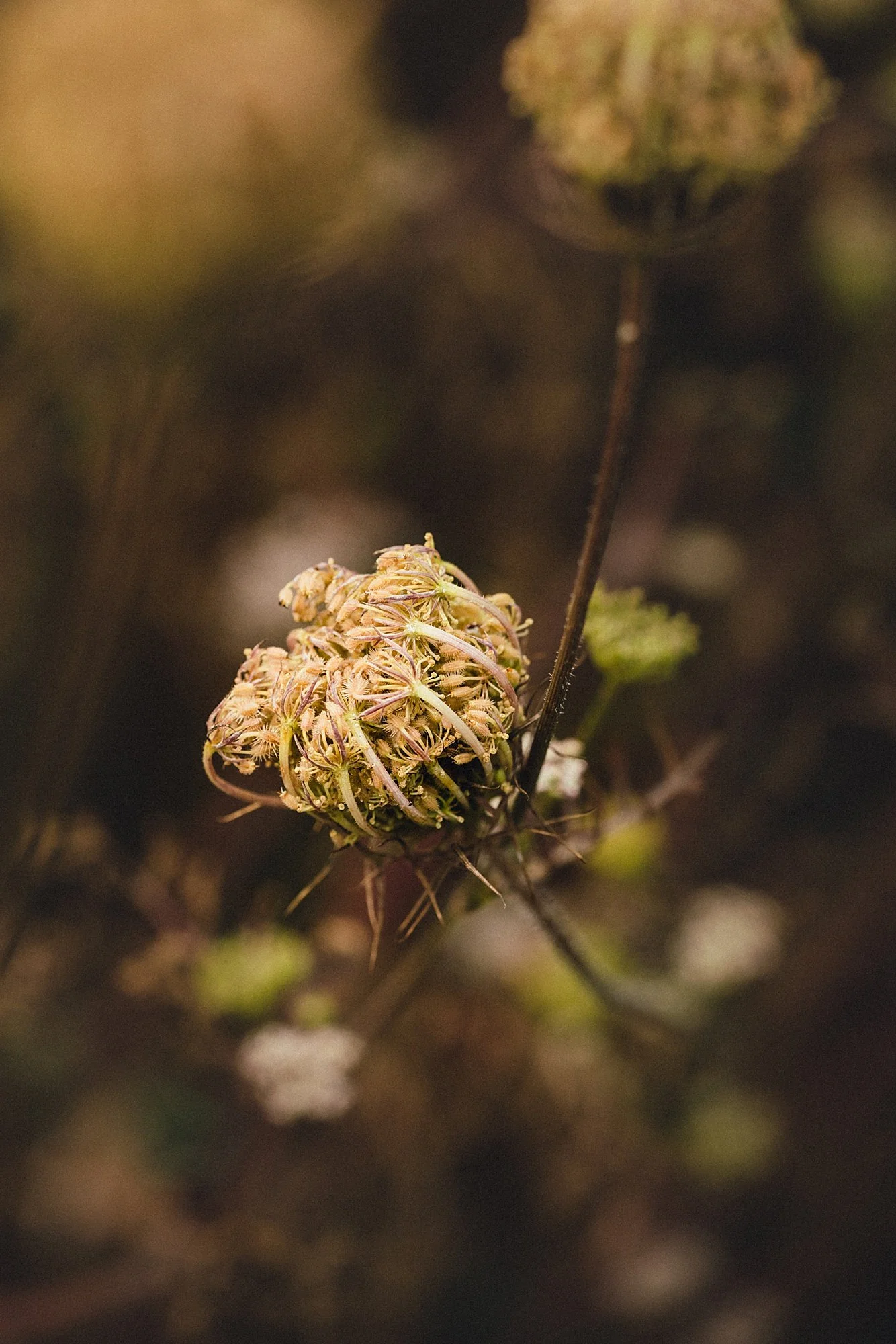
As Daucus ages, the flowers slowly fold in on themselves. Protecting their precious seeds like a crowd of tiny hands. A purposeful dance of pleasing tension. I love to observe this slow, intentional collapse, for it is when dried, that Daucus brings me the most joy.
The languid curling in on itself lends a faded Daucus bloom a beautiful, mounded appearance - the opposite of the expansive plateau it held when fresh. With the same versatility of its former self – the stems remain strong with dramatic silhouettes. I love to cluster the dried floral heads en masse in installations, or utilise selected stems to hold negative space.
Daucus is not a floating stem like its other umbellifer cousin Ammi, whose lighter bouncing stems react to the gentlest of breezes. The movement Daucus creates comes from the forms and outlines it holds. Achieving grace through more structural and architectural means.
A stem which holds feeling, and conveys it through form.